55+ Sacred Bible Verses About Anxiety to Ease Daily Panic
Affiliate Disclosure: Some links in this post are affiliate links. If you buy through them, I may earn a small commission at no extra cost to you.
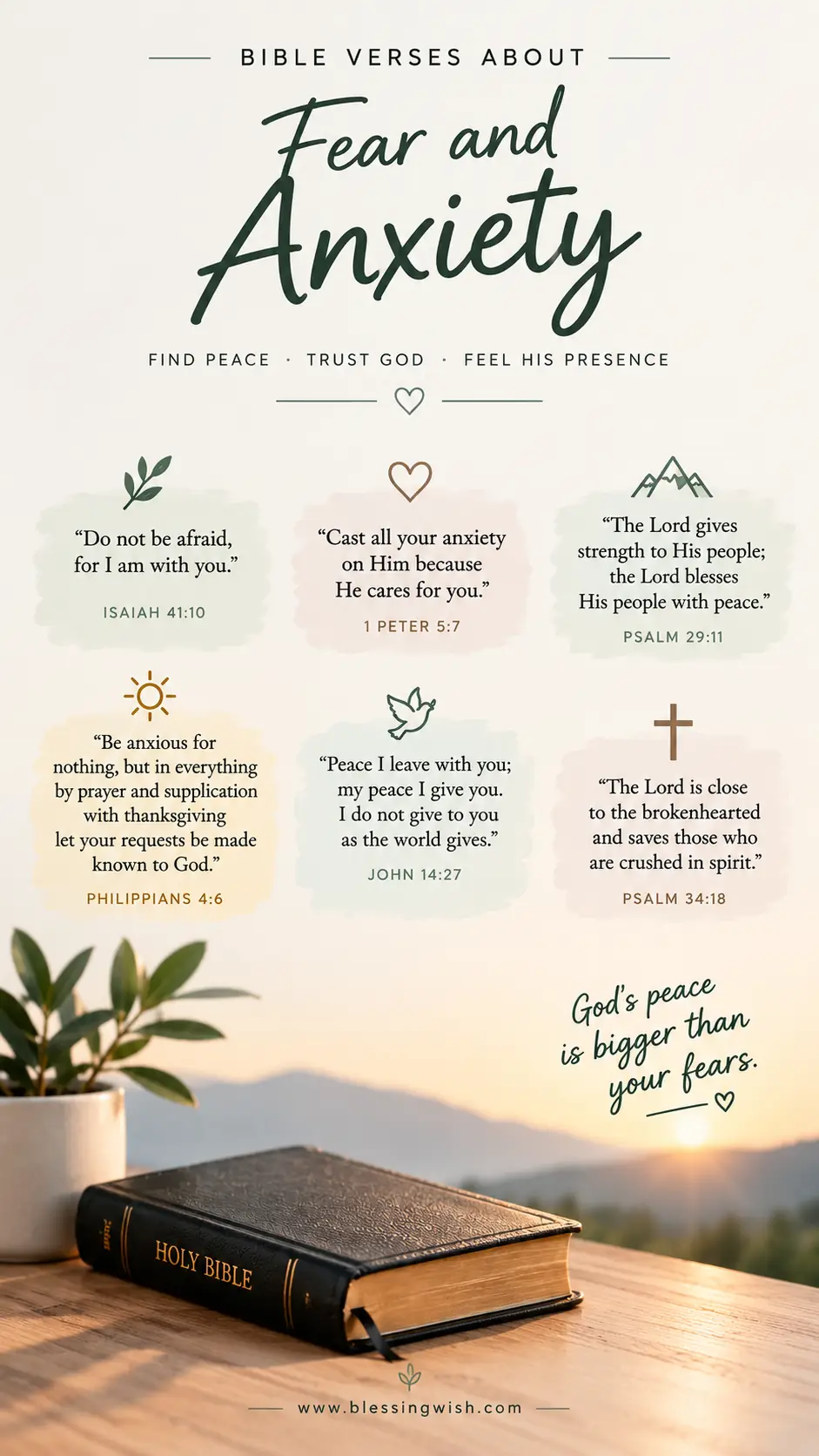
When anxiety fills your mind with worry, fear, or uncertainty, Scripture can point you back to God’s presence, care, and peace. These Bible verses about anxiety offer encouragement for anxious thoughts, troubled hearts, stressful moments, and seasons when fear feels difficult to quiet. From Philippians 4:6-7 to Psalm 94:19, the Bible repeatedly encourages believers to pray, trust God, surrender their burdens, and remember that they are not alone. This collection brings together more than 55 passages for moments when you need comfort, courage, reassurance, or a reminder to place your worries in God’s hands.
Written and reviewed by the BlessingWish editorial team. Scripture selections are compiled with care to reflect Christian tradition and Scripture, and updated periodically for accuracy.
The Bible acknowledges worry, fear, distress, and troubled thoughts while repeatedly directing believers toward God. Scripture encourages you to bring your concerns to Him through prayer, trust His care, remember His presence, and rest in His promises. Rather than carrying every burden alone, biblical teaching invites you to turn your attention toward the God who hears, helps, strengthens, and comforts His people.
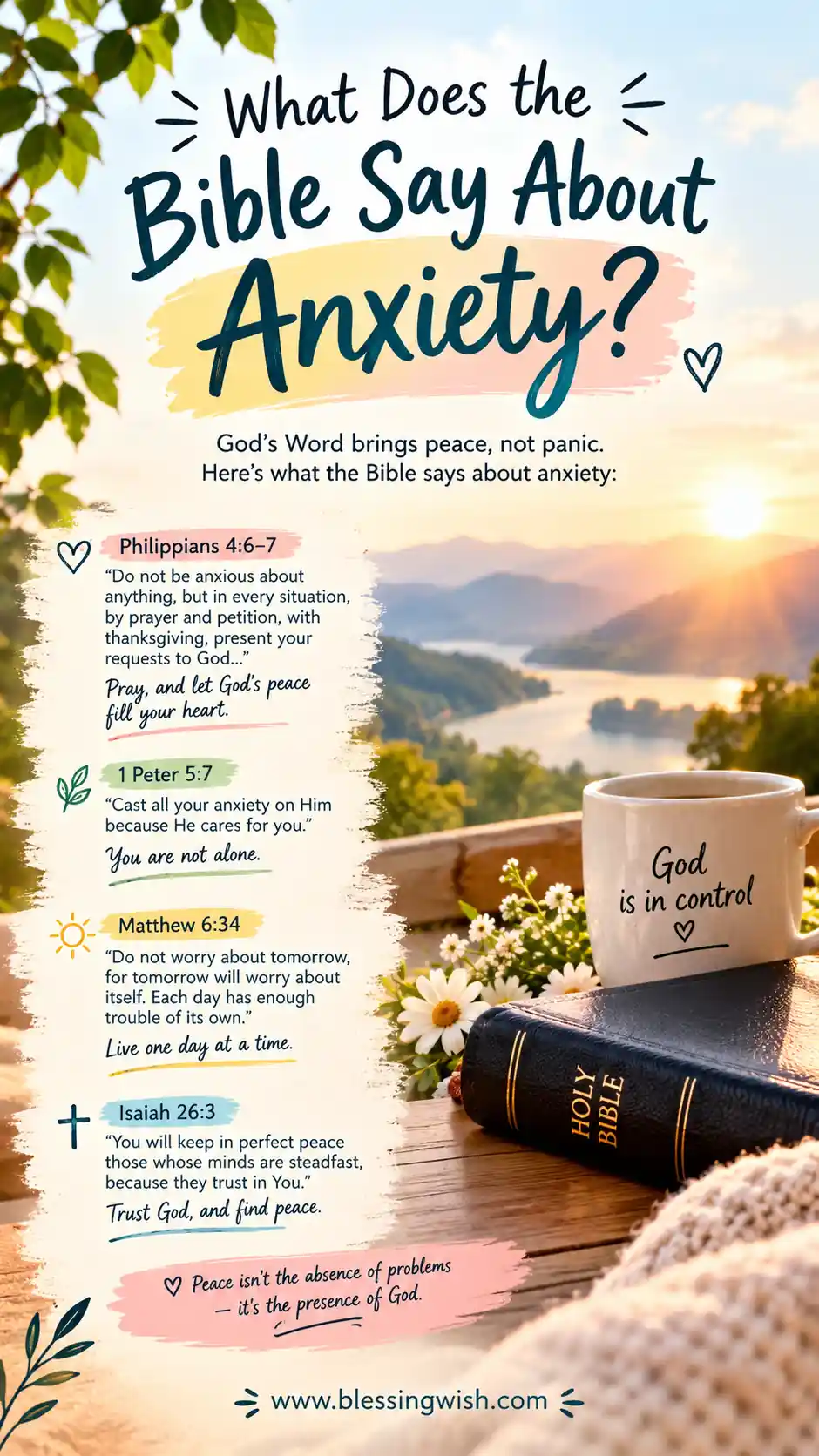
Philippians 4:6-7 gives one of the clearest instructions about anxiety. Paul tells believers to bring their requests to God through prayer and thanksgiving rather than remaining consumed by worry. The passage then points to the peace of God, which guards the heart and mind.
First Peter 5:7 gives another direct invitation: cast your cares upon God because He cares for you. This speaks to the personal nature of faith. Your worries matter to God.
Jesus also addresses worry in Matthew 6:25-34. He points believers toward God’s provision and reminds them to focus on the day before them rather than becoming consumed by tomorrow.
Across these passages, several themes appear repeatedly: prayer instead of worry, trust instead of fear, God’s presence during uncertainty, and peace in the middle of difficult circumstances.
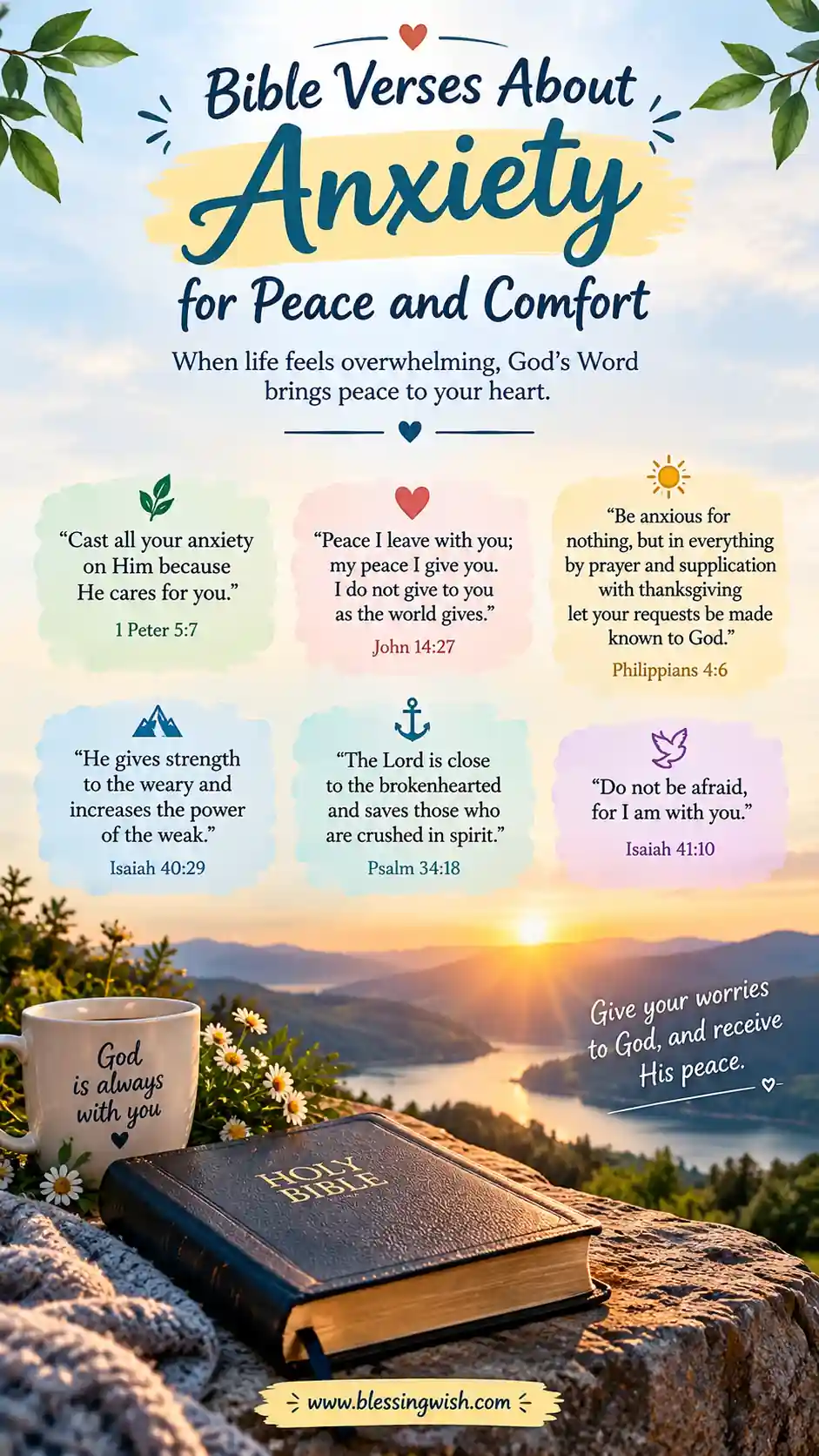
Bible Verses About Anxiety for Peace and Comfort
These Scriptures address anxiety from several angles. Some speak directly about worry. Others focus on fear, God’s presence, strength, peace, refuge, or the comfort found through prayer. Read the passages slowly and choose the ones that speak most clearly to what you are facing.
“Be careful for nothing; but in every thing by prayer and supplication with thanksgiving let your requests be made known unto God.”
“And the peace of God, which passeth all understanding, shall keep your hearts and minds through Christ Jesus.”
These verses offer a direct response to anxiety: bring your concerns to God. Prayer does not require you to pretend that nothing is wrong. It gives you a place to bring what is troubling you while trusting God with the outcome.
1 Peter 5:7, Cast Your Cares on God
“Casting all your care upon him; for he careth for you.”
This short verse carries a powerful message for anyone carrying a heavy emotional burden. You do not have to keep every worry locked inside your own mind. God invites you to place your cares in His hands because He cares for you personally.
Matthew 6:25-34, Do Not Worry About Tomorrow
“Therefore I say unto you, Take no thought for your life, what ye shall eat, or what ye shall drink.”
“Take therefore no thought for the morrow: for the morrow shall take thought for the things of itself.”
Jesus addresses the tendency to become consumed by future concerns. His teaching points toward trust in God’s provision and a willingness to face today’s responsibilities without allowing tomorrow’s uncertainties to control your heart.
Isaiah 41:10, God Is With You
“Fear thou not; for I am with thee: be not dismayed; for I am thy God.”
“I will strengthen thee; yea, I will help thee; yea, I will uphold thee with the right hand of my righteousness.”
This is one of the most comforting passages for fear and anxiety. God does not merely tell His people to stop being afraid. He gives reasons for courage: His presence, His strength, His help, and His sustaining power.
John 14:27, Jesus Gives Peace
“Peace I leave with you, my peace I give unto you.”
“Let not your heart be troubled, neither let it be afraid.”
Jesus connects His peace with a heart that does not need to remain controlled by fear. When circumstances feel unsettled, this passage can remind you that Christian peace rests in Christ rather than depending entirely on what happens around you.
“Cast thy burden upon the LORD, and he shall sustain thee.”
This Psalm speaks directly to the weight of carrying a burden. When worry becomes exhausting, the verse encourages you to place that burden before God and trust Him to sustain you.
Psalm 34:4, God Delivers From Fear
“I sought the LORD, and he heard me, and delivered me from all my fears.”
David describes turning toward God in the middle of fear. The verse offers encouragement to pray when fear becomes overwhelming and to remember that God hears those who seek Him.
Psalm 94:19, Comfort for Anxious Thoughts
“In the multitude of my thoughts within me thy comforts delight my soul.”
An anxious mind can become crowded with many thoughts at once. This verse recognizes that inner struggle while pointing toward God’s comfort. It is especially fitting when overthinking leaves you mentally exhausted.
Psalm 23, The Lord Is My Shepherd
“The LORD is my shepherd; I shall not want.”
“Yea, though I walk through the valley of the shadow of death, I will fear no evil: for thou art with me.”
Psalm 23 presents God as a shepherd who guides, provides, and remains present through dark valleys. Its message can bring reassurance when anxiety makes the future feel uncertain.
Psalm 46:1, God Is Our Refuge
“God is our refuge and strength, a very present help in trouble.”
When anxiety makes you feel exposed or overwhelmed, this verse offers three simple truths: God is a refuge, God gives strength, and God is present in trouble.
Psalm 46:10, Be Still Before God
“Be still, and know that I am God.”
This familiar verse calls the heart toward stillness and recognition of God’s authority. During an anxious moment, it can serve as a short reminder to pause, pray, and turn your attention toward God.
Joshua 1:9, Be Strong and Courageous
“Be strong and of a good courage; be not afraid, neither be thou dismayed: for the LORD thy God is with thee whithersoever thou goest.”
Joshua faced uncertainty, responsibility, and a difficult future. God’s promise of presence gave him reason to move forward with courage. The same passage can encourage anyone facing an uncertain season.
2 Timothy 1:7, God Gives Strength and Courage
“For God hath not given us the spirit of fear; but of power, and of love, and of a sound mind.”
This verse contrasts fear with qualities that can shape a faithful response: power, love, and a sound mind. It offers a concise reminder when fearful thoughts begin to dominate your attention.
Proverbs 12:25, A Good Word Brings Gladness
“Heaviness in the heart of man maketh it stoop: but a good word maketh it glad.”
Anxiety can weigh heavily on the heart. This proverb recognizes that emotional burdens affect us deeply and highlights the value of encouraging words. Scripture itself can become one source of that encouragement.
“Come unto me, all ye that labour and are heavy laden, and I will give you rest.”
Jesus invites burdened people to come to Him. For someone overwhelmed by worry or emotional pressure, these words offer an invitation to seek rest rather than carrying every burden alone.
John 16:33, Peace in Troubled Times
“These things I have spoken unto you, that in me ye might have peace.”
“In the world ye shall have tribulation: but be of good cheer; I have overcome the world.”
Jesus does not promise a life without trouble. Instead, He points believers toward peace in Him even while difficulties remain.
Psalm 56:3, Trust God When Afraid
“What time I am afraid, I will trust in thee.”
This short verse is easy to remember during a fearful moment. It does not deny the existence of fear. It gives the heart a response: when fear comes, turn toward trust in God.
Psalm 91, God as Refuge and Protector
“He that dwelleth in the secret place of the most High shall abide under the shadow of the Almighty.”
Psalm 91 repeatedly presents God as a refuge and source of protection. It can be especially meaningful during seasons when anxiety is connected to safety, uncertainty, or fear about what may happen.
Romans 8:38-39, Nothing Separates You From God’s Love
“For I am persuaded, that neither death, nor life, nor angels, nor principalities, nor powers…”
“Nor height, nor depth, nor any other creature, shall be able to separate us from the love of God.”
Anxiety can create fears about loss, abandonment, or an uncertain future. Romans 8 points toward the security of God’s love and reminds believers that no created thing can separate them from it.
Isaiah 43:1-2, God Is With You Through Deep Waters
“Fear not: for I have redeemed thee, I have called thee by thy name; thou art mine.”
“When thou passest through the waters, I will be with thee.”
The passage focuses on God’s presence through difficult circumstances. It does not say that believers will never face deep waters. It promises that God will be with them as they pass through them.
Deuteronomy 31:8, God Goes Before You
“And the LORD, he it is that doth go before thee; he will be with thee, he will not fail thee, neither forsake thee.”
When anxiety centers on an unknown future, this verse offers a powerful reminder of God’s presence. You may not know what lies ahead, but Scripture points to a God who goes before His people.
Hebrews 13:5-6, The Lord Is Your Helper
“For he hath said, I will never leave thee, nor forsake thee.”
“So that we may boldly say, The Lord is my helper, and I will not fear what man shall do unto me.”
These verses reinforce God’s promise of presence and help. They can be especially meaningful when anxiety is connected to uncertainty about people, circumstances, or what may happen next.
Additional Bible Verses for Anxiety, Worry, and Peace
Psalm 27:1, The Lord is described as light, salvation, and strength, giving believers reason not to fear.
Psalm 37:5, Commit your way to the Lord, trust Him, and place your plans in His hands.
Psalm 42:11, When the soul feels cast down, the Psalmist redirects his hope toward God.
Psalm 61:2, The Psalmist asks God to lead him to a rock higher than himself when his heart is overwhelmed.
Psalm 62:8, Trust God at all times and pour out your heart before Him.
Psalm 121:1-2, Help is identified as coming from the Lord, the Maker of heaven and earth.
Proverbs 3:5-6, Trust in the Lord rather than depending entirely on your own understanding.
Proverbs 16:3, Commit your works to the Lord and place your plans before Him.
Isaiah 26:3, Scripture connects steadfast trust in God with perfect peace.
Jeremiah 17:7-8, The person who trusts in the Lord is compared with a tree planted near water.
Lamentations 3:22-23, God’s mercies are described as new every morning.
Nahum 1:7, The Lord is called a stronghold in the day of trouble.
Zephaniah 3:17, God is described as being with His people and rejoicing over them.
Mark 4:39-40, Jesus calms the storm and challenges His disciples’ fear.
Luke 12:6-7, Jesus teaches that God knows and values His people.
Romans 12:12, Believers are encouraged to remain hopeful, patient in tribulation, and faithful in prayer.
Romans 15:13, God is described as the source of hope, joy, peace, and abundant hope through faith.
2 Corinthians 1:3-4, God is called the Father of mercies and the God of all comfort.
2 Corinthians 4:8-9, Paul describes being troubled without being destroyed.
2 Corinthians 12:9, God’s grace is presented as sufficient, with strength made perfect in weakness.
Philippians 4:8, Believers are encouraged to focus their thoughts on things that are true, honest, just, pure, lovely, and worthy of good report.
Colossians 3:15, The peace of God is described as something that can rule in the heart.
2 Thessalonians 3:16, Paul asks the Lord of peace to give peace always and by every means.
Hebrews 4:16, Believers are invited to approach God’s throne of grace to receive mercy and help.
James 1:5, Those who lack wisdom are encouraged to ask God, who gives generously.
James 4:8, Drawing near to God is presented as a response of faith.
1 John 4:18, Scripture teaches that perfect love casts out fear.
These passages give you different ways to approach anxiety through Scripture. Some emphasize prayer. Others focus on God’s presence, His protection, His peace, His strength, or His unfailing love. You can return to the passages that speak most directly to your present circumstances.
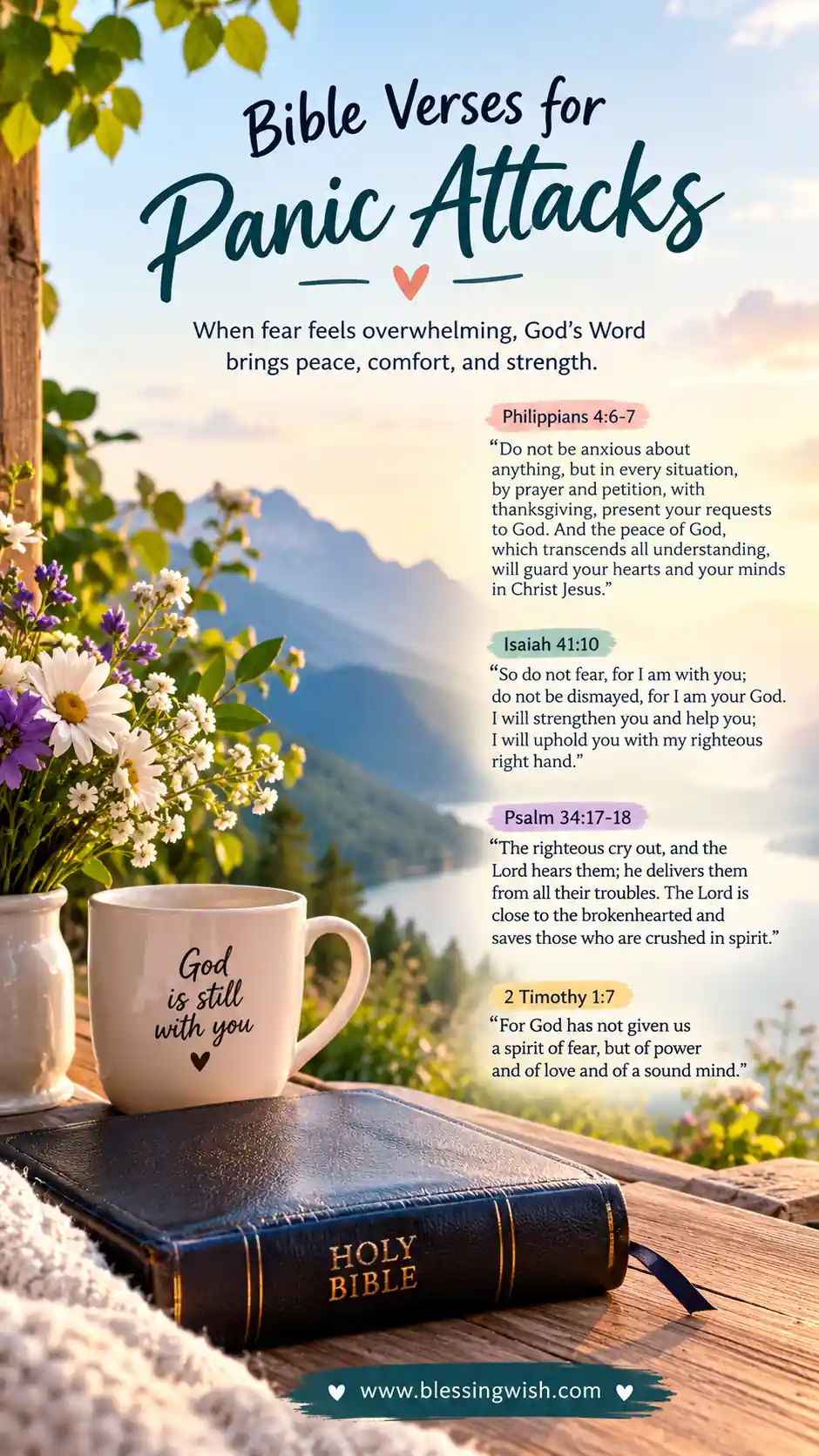
Bible Verses for Panic Attacks
Panic can bring an intense rush of fear, physical discomfort, racing thoughts, and a sense that something is terribly wrong. During such a moment, long explanations may be difficult to process. Short, familiar Scriptures can give you words to pray and truths to remember while you seek to become calm.
The Bible does not describe every modern experience of panic in clinical terms, but it contains many passages about intense fear, distress, trembling, trouble, and seeking refuge in God. These verses can provide spiritual comfort during frightening moments.
Bible Scripture for Panic Attacks
Psalm 56:3 is one of the simplest passages to remember:
“What time I am afraid, I will trust in thee.”
Its strength is in its simplicity. Fear may be present, but trust can become your response.
Isaiah 41:10 also speaks directly to fear:
“Fear thou not; for I am with thee.”
When panic makes you feel alone or unsafe, this verse brings attention back to God’s presence. It continues by emphasizing His strength, help, and support.
Psalm 46:1 gives another short declaration:
“God is our refuge and strength, a very present help in trouble.”
The word “present” matters when fear feels immediate. The passage points toward God as a refuge during trouble rather than someone distant from your situation.
John 14:27 offers Christ’s words about peace:
“Peace I leave with you, my peace I give unto you.”
These passages can be read slowly rather than rushed through. Choose one sentence that you can repeat as you pray.
When panic is connected to intense fear, Scripture about God’s presence and courage can be particularly meaningful.
Joshua 1:9 says:
“Be strong and of a good courage; be not afraid, neither be thou dismayed.”
The reason for courage follows immediately: “for the LORD thy God is with thee.” The passage does not place courage in human strength alone. God’s presence is central to the encouragement.
Psalm 34:4 says:
“I sought the LORD, and he heard me, and delivered me from all my fears.”
This verse gives a simple pattern for prayer during fear: seek God, remember that He hears, and place your fears before Him.
2 Timothy 1:7 provides another short reminder:
“For God hath not given us the spirit of fear; but of power, and of love, and of a sound mind.”
When fearful thoughts become loud, this verse can help redirect your attention toward God’s gifts of strength, love, and a sound mind.
Bible Verses to Read During a Panic Attack
If you are experiencing intense fear, you can keep your Scripture practice simple. Choose one verse rather than trying to read a long passage at once.
Psalm 56:3, “What time I am afraid, I will trust in thee.”
Isaiah 41:10, “Fear thou not; for I am with thee.”
Psalm 46:1, “God is our refuge and strength.”
John 14:27, “Peace I leave with you, my peace I give unto you.”
1 Peter 5:7, “Casting all your care upon him; for he careth for you.”
Psalm 34:4, “I sought the LORD, and he heard me.”
Joshua 1:9, “Be strong and of a good courage.”
Philippians 4:6-7, bring your requests to God through prayer and receive His peace.
A simple prayer can accompany these verses: “Lord, I am afraid. Help me remember that You are with me. I give this fear to You and ask for Your peace, strength, and help.”
If panic attacks happen repeatedly, feel severe, or interfere with daily life, spiritual practices can be used alongside appropriate medical or mental-health support. Seeking professional help does not conflict with faith. It can be part of caring responsibly for yourself.
The goal during a frightening moment is not to force yourself to feel calm instantly. Start with one verse. Breathe slowly, pray honestly, and remind yourself of the truth you are reading.
Anxiety Psalms for Fear, Worry, and a Troubled Heart
The book of Psalms gives anxious hearts language for difficult emotions. The writers speak openly about fear, distress, uncertainty, loneliness, and trouble, while repeatedly turning toward God for help. These anxiety Psalms can be especially comforting when you need Scripture that acknowledges what you are feeling instead of asking you to hide it.
Psalms About Fear and Anxiety
Psalm 34:4 says:
“I sought the LORD, and he heard me, and delivered me from all my fears.”
David connects fear with seeking God. The verse does not suggest that fear makes faith impossible. Instead, it shows a person bringing fear directly to the Lord and trusting Him to provide help.
Psalm 56:3 gives an even shorter response:
“What time I am afraid, I will trust in thee.”
This is useful when anxious thoughts make it difficult to concentrate. The verse gives you one clear action: turn fear into an opportunity to trust God.
Psalm 55:22 says:
“Cast thy burden upon the LORD, and he shall sustain thee.”
Anxiety often becomes heavier when you continually carry the same concern in your own thoughts. This Psalm invites you to place that burden before God and trust Him for strength.
Psalm 94:19 speaks directly to an unsettled mind:
“In the multitude of my thoughts within me thy comforts delight my soul.”
This passage can speak to overthinking because it recognizes a mind filled with many thoughts. God’s comfort becomes the answer to that inner distress.
Psalm 61:2 also offers a fitting prayer:
“From the end of the earth will I cry unto thee, when my heart is overwhelmed.”
When your heart feels overwhelmed, you can bring that feeling to God honestly. The Psalm models prayer from a place of emotional pressure rather than waiting until everything feels settled.
Psalm 23 provides one of Scripture’s clearest pictures of God’s care:
“The LORD is my shepherd; I shall not want.”
Later, David writes:
“Yea, though I walk through the valley of the shadow of death, I will fear no evil: for thou art with me.”
The reassurance comes from God’s presence. The valley is still there, but David does not face it alone.
Psalm 46:1 says:
“God is our refuge and strength, a very present help in trouble.”
When anxiety makes you feel vulnerable, this verse gives you three truths to remember: God is a refuge, God provides strength, and God is present in trouble.
Psalm 46:10 adds:
“Be still, and know that I am God.”
This short passage can become a prayer when your thoughts are racing. Pause. Read the verse slowly. Let its focus turn your attention from the problem toward God.
Psalm 91 also centers on God as a place of refuge:
“He that dwelleth in the secret place of the most High shall abide under the shadow of the Almighty.”
For someone facing fear about safety or uncertainty, Psalm 91 can provide a reminder of God’s protection and care.
Together, these Psalms show that faith does not require ignoring fear. They give you words for fear, overwhelm, worry, and uncertainty while directing your heart toward God’s presence, comfort, strength, and refuge.
Bible Verses About Anxiety and Overthinking
Anxiety can become closely connected with overthinking. One concern leads to another, and your mind begins replaying possibilities, imagining negative outcomes, or searching for answers you cannot yet have. Scripture offers several passages that redirect anxious thoughts toward prayer, trust, God’s presence, and what you can faithfully handle today.
Philippians 4:6-7 is central to this response. Paul tells believers to bring their requests to God through prayer and thanksgiving. The passage then points to God’s peace guarding the heart and mind through Christ.
The message is practical. When a thought keeps returning, you can turn that thought into prayer instead of allowing it to remain an endless internal conversation.
Matthew 6:25-34 also addresses future-focused worry. Jesus repeatedly points people away from being consumed by tomorrow. His teaching encourages trust in God’s care and attention to today’s responsibilities.
Psalm 94:19 is especially relevant when your mind feels crowded:
“In the multitude of my thoughts within me thy comforts delight my soul.”
The verse recognizes that many thoughts can exist at once. It does not shame the person experiencing them. Instead, it points toward God’s comfort.
Proverbs 12:25 adds:
“Heaviness in the heart of man maketh it stoop: but a good word maketh it glad.”
An anxious mind can affect the heart deeply. A good word, including a promise from Scripture, can provide encouragement when worry has become emotionally heavy.
First Peter 5:7 offers another response to recurring thoughts:
“Casting all your care upon him; for he careth for you.”
You can use this verse when overthinking centers on something outside your control. Name the concern before God. Ask for wisdom where action is needed. Then surrender what you cannot control.
When anxious thoughts return, try keeping your Scripture practice simple:
Identify the thought that is causing the most worry.
Find a verse that speaks directly to it.
Turn the concern into a short prayer.
Thank God for His presence and care.
Return your attention to what you can do today.
These Bible verses for anxious thoughts do not promise that every difficult thought will disappear immediately. They give you a biblical way to respond when your mind becomes overwhelmed.
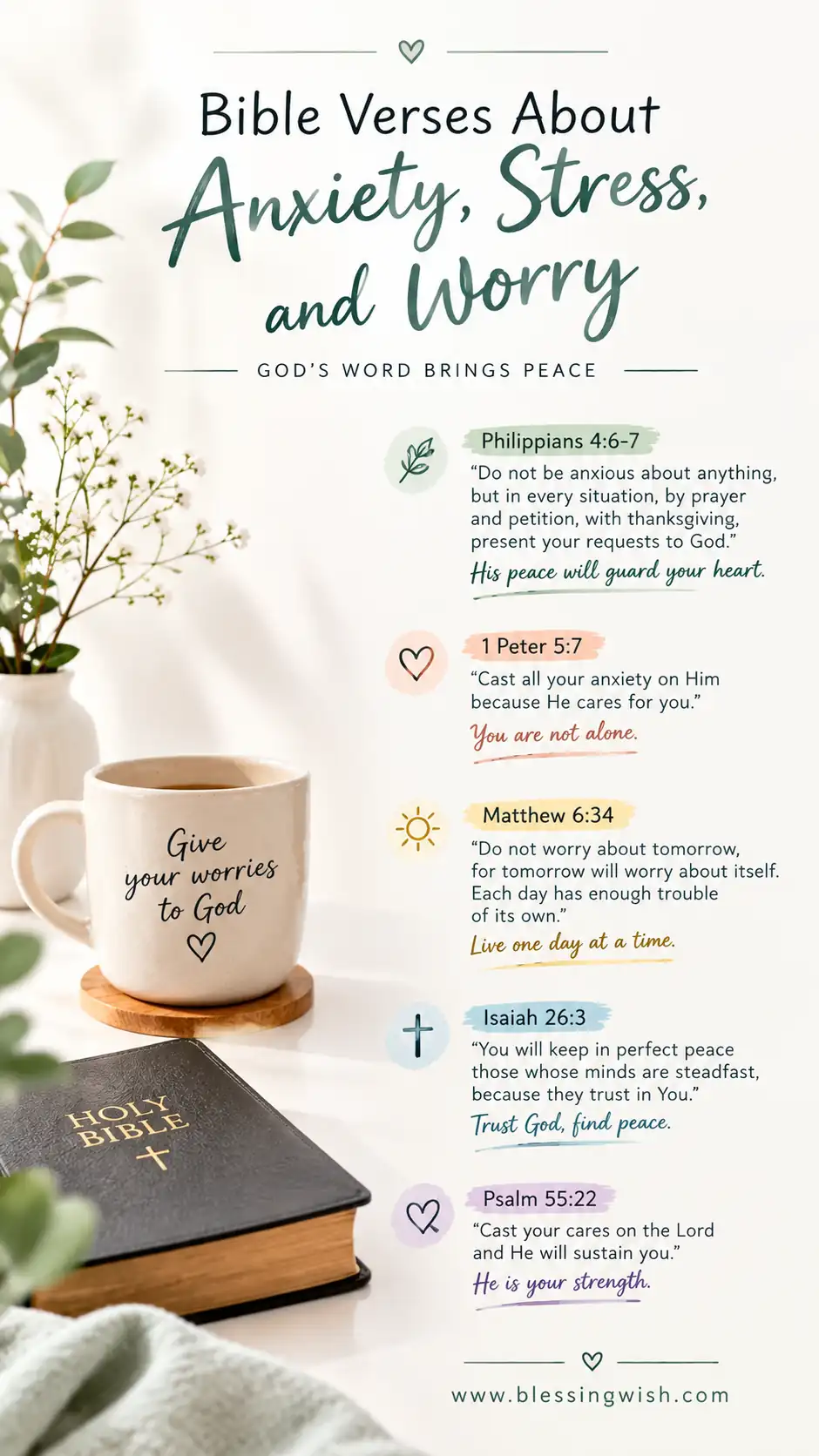
Bible Verses About Anxiety, Stress, and Worry
Stress and worry can come from responsibilities, relationships, finances, work, family concerns, health difficulties, or uncertainty about the future. Scripture speaks to these experiences through passages about burdens, trust, prayer, God’s provision, and peace.
Bible Verses About Worry
Jesus’ teaching in Matthew 6:25-34 directly addresses worry. He tells His followers not to become consumed with concerns about food, clothing, life, and tomorrow. Instead, He points them toward God’s care and provision.
Philippians 4:6-7 gives another clear response to worry. Rather than allowing anxious concerns to control the heart, believers are encouraged to bring their requests to God through prayer and thanksgiving.
First Peter 5:7 says:
“Casting all your care upon him; for he careth for you.”
This verse is especially meaningful when worry feels personal and persistent. God is not presented as indifferent to your concerns. The invitation is to place those cares before Him.
Psalm 37:5 says:
“Commit thy way unto the LORD; trust also in him; and he shall bring it to pass.”
The verse combines commitment and trust. You can bring your plans and concerns to God without needing to know every detail of how the future will unfold.
Proverbs 3:5-6 offers similar guidance:
“Trust in the LORD with all thine heart; and lean not unto thine own understanding.”
When worry grows because you cannot understand what will happen next, this passage encourages trust even when your understanding feels incomplete.
Bible Verses About Stress and Anxiety
Psalm 46:1 says:
“God is our refuge and strength, a very present help in trouble.”
This verse fits stressful seasons because it focuses on where strength comes from. When responsibilities become too heavy, Scripture points toward God as a present source of help.
Matthew 11:28 offers Christ’s invitation to people carrying heavy burdens:
“Come unto me, all ye that labour and are heavy laden, and I will give you rest.”
Rest does not mean pretending your responsibilities do not exist. It means recognizing that you were never meant to carry every burden without turning toward God.
Isaiah 41:10 also speaks to stressful circumstances:
“I will strengthen thee; yea, I will help thee; yea, I will uphold thee.”
The repeated language of strength and help gives the anxious heart something concrete to remember.
Psalm 62:8 says:
“Trust in him at all times; ye people, pour out your heart before him.”
This provides a healthy biblical picture of prayer. You can pour out your heart honestly while still choosing trust.
During a stressful season, these passages can become part of a short devotional practice. Read one verse in the morning, pray about the concern it addresses, and return to it when worry begins taking over your attention.
Bible Verses About Fear and Anxiety
Fear and anxiety often overlap. You may worry about something that could happen, feel afraid of an uncertain outcome, or struggle with fear after a difficult experience. Scripture repeatedly responds by reminding believers of God’s presence, strength, protection, and love.
Isaiah 41:10 is one of the clearest passages:
“Fear thou not; for I am with thee; be not dismayed; for I am thy God.”
God’s presence comes before the promises of strength and help. The verse continues:
“I will strengthen thee; yea, I will help thee; yea, I will uphold thee.”
For someone experiencing fear and anxiety, the passage provides several reasons to trust: God is present, God is your God, God gives strength, and God provides help.
Psalm 56:3 gives a simple response:
“What time I am afraid, I will trust in thee.”
This verse is powerful because it acknowledges fear without making fear the final word. The response is trust.
Joshua 1:9 says:
“Be strong and of a good courage; be not afraid, neither be thou dismayed.”
Joshua was facing a demanding future, and God’s instruction was connected to His presence:
“For the LORD thy God is with thee whithersoever thou goest.”
When fear comes from uncertainty about what lies ahead, this promise can remind you that God’s presence is not limited to familiar or comfortable circumstances.
Second Timothy 1:7 says:
“For God hath not given us the spirit of fear; but of power, and of love, and of a sound mind.”
The verse points toward power, love, and a sound mind rather than allowing fear to define the believer’s response.
Deuteronomy 31:8 gives another reassurance:
“And the LORD, he it is that doth go before thee; he will be with thee, he will not fail thee, neither forsake thee.”
Isaiah 43:1-2 similarly emphasizes God’s presence through difficult circumstances. God tells His people not to fear because He has called them His own, then promises to be with them through waters and fire.
Romans 8:38-39 addresses a different kind of fear, the fear of separation or loss. Paul declares that nothing in creation can separate believers from the love of God in Christ Jesus.
These passages support a simple biblical pattern for fear: acknowledge what frightens you, bring it to God, remember His presence, and choose trust. Faith does not require you to deny that something feels frightening. It gives you a place to take that fear.
Bible Verses for Anxiety and Depression
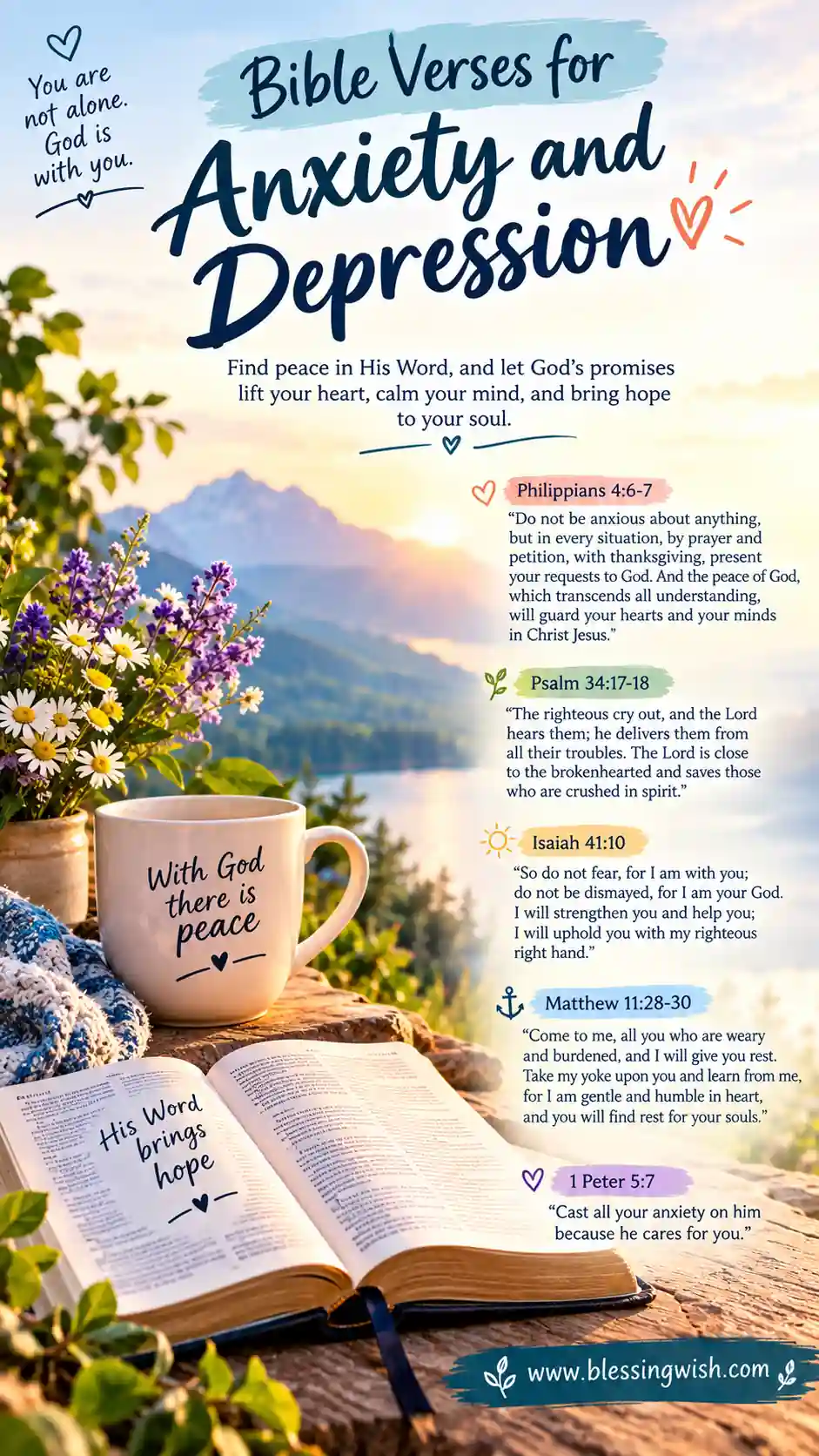
Anxiety and depression can make ordinary days feel heavy. Scripture offers words of comfort for seasons marked by sadness, fear, discouragement, loneliness, and emotional exhaustion. These passages do not suggest that difficult emotions are signs of weak faith. Instead, they show people bringing their pain honestly before God and finding reasons to continue hoping in Him.
Psalm 34:18 says:
“The LORD is nigh unto them that are of a broken heart; and saveth such as be of a contrite spirit.”
This verse can bring comfort when emotional pain feels isolating. It presents God as near to those whose hearts are hurting.
Psalm 94:19 speaks to the experience of having many thoughts at once:
“In the multitude of my thoughts within me thy comforts delight my soul.”
When anxious or discouraging thoughts become overwhelming, this verse points toward God’s comfort rather than condemnation.
Matthew 11:28 offers Christ’s invitation:
“Come unto me, all ye that labour and are heavy laden, and I will give you rest.”
For someone carrying emotional or mental exhaustion, these words provide a reminder that bringing your burden to Christ is an act of faith.
Romans 8:38-39 offers reassurance when depression or anxiety creates fears of being abandoned:
“For I am persuaded, that neither death, nor life… shall be able to separate us from the love of God.”
Nothing in creation can separate believers from God’s love in Christ.
Isaiah 43:2 gives another promise for difficult seasons:
“When thou passest through the waters, I will be with thee.”
The passage does not deny that difficult experiences occur. It emphasizes God’s presence while a person moves through them.
Psalm 42:11 also models honest faith:
“Why art thou cast down, O my soul? and why art thou disquieted within me?”
The Psalmist acknowledges his emotional struggle and then redirects his attention toward hope in God.
If anxiety or depression persists, becomes severe, or interferes with daily life, Scripture can be part of your spiritual support while you also seek appropriate professional care. Reaching out for help does not mean abandoning faith. It can be one responsible way of caring for the life God has given you.
Bible Verses for Overcoming Anxiety Through Faith and Trust
Overcoming anxiety according to the Bible begins with where you place your worries. Scripture repeatedly calls believers to trust God, pray about their concerns, remember His presence, and rest in His promises. Faith does not mean every anxious feeling disappears immediately. It means learning to bring those feelings to God instead of allowing fear to have the final word.
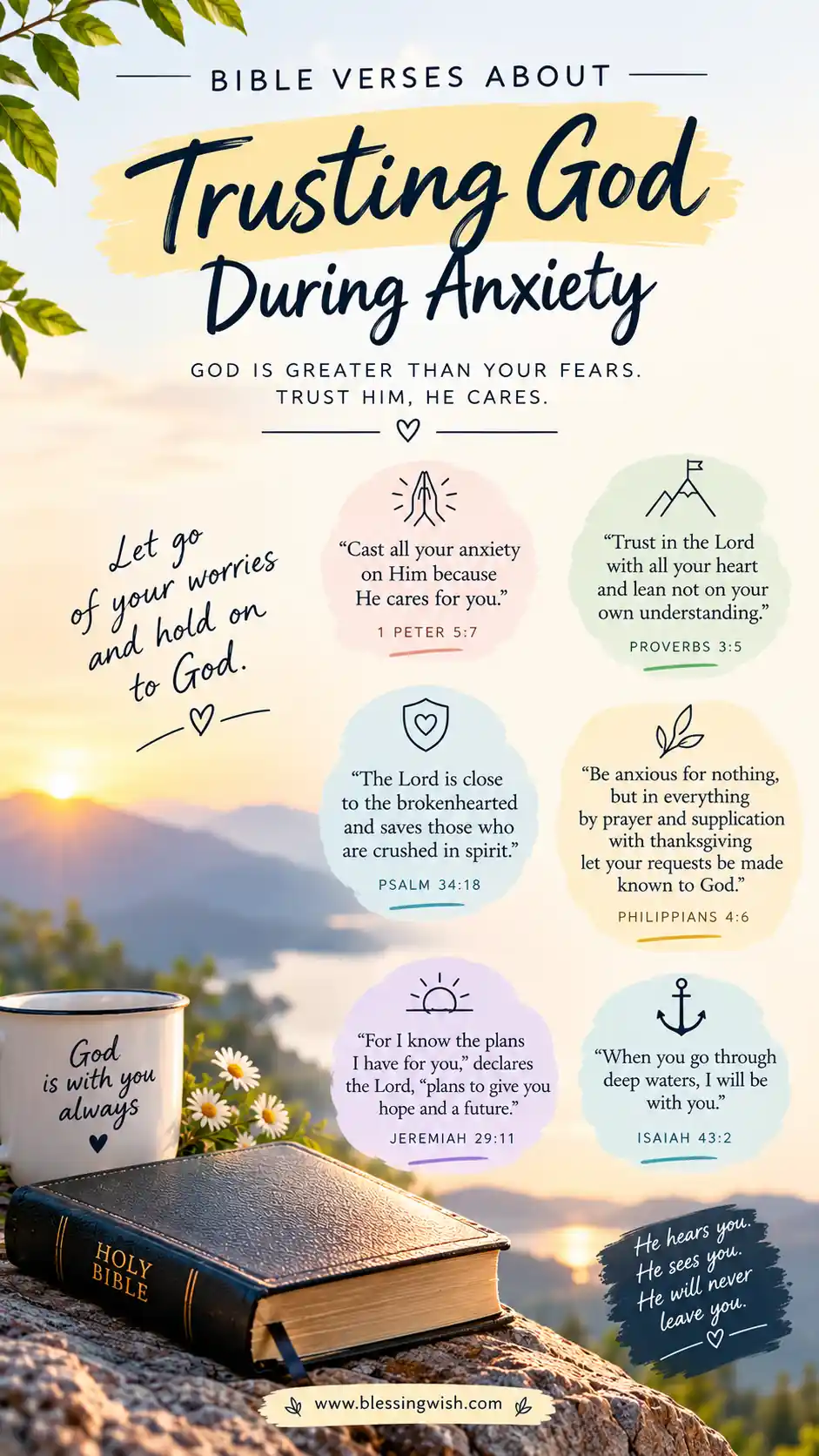
Bible Verses About Trusting God During Anxiety
Proverbs 3:5-6 says:
“Trust in the LORD with all thine heart; and lean not unto thine own understanding.”
Anxiety often grows when you cannot predict what comes next. This passage reminds you that trust does not require knowing every answer first. You can acknowledge what you do not understand while still placing your confidence in God.
Psalm 62:8 says:
“Trust in him at all times; ye people, pour out your heart before him.”
The verse combines trust with honesty. You can pour out your fears, questions, and concerns before God without hiding what is happening inside you.
Psalm 37:5 gives another practical instruction:
“Commit thy way unto the LORD; trust also in him.”
This can apply to decisions, relationships, responsibilities, and uncertain circumstances. Bring your plans to God, do what you can faithfully, and leave the outcome in His hands.
Isaiah 26:3 connects peace with steadfast trust:
“Thou wilt keep him in perfect peace, whose mind is stayed on thee: because he trusteth in thee.”
When anxious thoughts repeatedly pull your attention toward possible problems, this passage encourages you to return your focus to God.
Bible Verses to Overcome Anxiety
Philippians 4:6-7 remains central:
“Be careful for nothing; but in every thing by prayer and supplication with thanksgiving let your requests be made known unto God.”
The passage presents prayer as an active response to anxiety. Instead of repeatedly carrying the same concern alone, bring it before God with specific requests and thanksgiving.
First Peter 5:7 gives a similar instruction:
“Casting all your care upon him; for he careth for you.”
You can make this verse part of your daily prayer. Name the concern. Give it to God. Ask for wisdom about what you can do. Then remind yourself that His care does not depend on your ability to control the outcome.
Psalm 55:22 says:
“Cast thy burden upon the LORD, and he shall sustain thee.”
The emphasis is not on carrying the burden more efficiently. It is on placing the burden before God and trusting Him for sustaining strength.
Matthew 6:34 adds:
“Take therefore no thought for the morrow.”
Jesus’ teaching directs attention away from becoming consumed by future concerns. You still have responsibilities, but you do not need to live every future difficulty today.
A simple Scripture-based response to anxiety can look like this:
Identify the worry that is occupying your mind.
Find a biblical passage that speaks to that concern.
Tell God honestly what you are afraid of.
Ask Him for wisdom, strength, and peace.
Thank Him for His presence and care.
Focus on the next faithful step instead of trying to solve everything at once.
This approach keeps faith connected to daily action. You can pray about what you cannot control while responsibly addressing what you can.
Short Bible Verses for Anxiety
When anxiety is intense, a short Scripture can be easier to remember than a long passage. These verses give you brief truths about trust, peace, courage, God’s presence, and His care. Save a few that speak to your current situation and return to them during stressful moments.
“What time I am afraid, I will trust in thee.” Psalm 56:3
“Fear thou not; for I am with thee.” Isaiah 41:10
“God is our refuge and strength.” Psalm 46:1
“Be still, and know that I am God.” Psalm 46:10
“Casting all your care upon him; for he careth for you.” 1 Peter 5:7
“Cast thy burden upon the LORD, and he shall sustain thee.” Psalm 55:22
“The LORD is my shepherd; I shall not want.” Psalm 23:1
“The LORD is my light and my salvation; whom shall I fear?” Psalm 27:1
“Commit thy way unto the LORD; trust also in him.” Psalm 37:5
“The Lord is my helper, and I will not fear.” Hebrews 13:6
“Peace I leave with you, my peace I give unto you.” John 14:27
“Come unto me… and I will give you rest.” Matthew 11:28
“I sought the LORD, and he heard me.” Psalm 34:4
“The LORD is nigh unto them that are of a broken heart.” Psalm 34:18
“Trust in him at all times; ye people, pour out your heart before him.” Psalm 62:8
These short Bible verses for anxiety can work well for personal prayer, Scripture cards, devotional notes, or journaling. You do not need to use every verse. Choose one or two that address what you are facing and spend time reflecting on their meaning.
Bible Verses for Anxiety at Night
Nighttime can make worries feel louder. When the day’s distractions disappear, concerns about tomorrow, relationships, responsibilities, or uncertain circumstances may return. Scripture can give your mind a steady place to turn before sleep.
Psalm 4:8 says:
“I will both lay me down in peace, and sleep: for thou, LORD, only makest me dwell in safety.”
This verse connects peaceful sleep with trust in God’s care. It can become a simple prayer when you are struggling to settle your thoughts.
Psalm 23 is also fitting for nighttime anxiety. The Psalm describes the Lord as a shepherd who provides, guides, and remains present through dark valleys. Its message can remind you that darkness does not mean God’s presence has disappeared.
Psalm 46:10 says:
“Be still, and know that I am God.”
Read this slowly when your thoughts keep moving from one concern to another. Let the verse become a prompt to pause rather than continue mentally rehearsing tomorrow’s problems.
Psalm 91 can also provide comfort when nighttime anxiety centers on safety. Its language repeatedly presents God as refuge and protector.
Philippians 4:6-7 gives a practical prayer pattern before bed. Bring specific worries to God, include thanksgiving, and ask for His peace. You can write down concerns that keep returning and deliberately place them in prayer rather than continuing to solve them in your head.
A simple nighttime Scripture routine can include:
Choose one short passage before getting into bed.
Read it slowly two or three times.
Tell God what is troubling you.
Thank Him for one specific provision from the day.
Ask for peace and wisdom for tomorrow.
Return to the same verse whenever your thoughts begin racing.
You may not feel peaceful immediately, and that does not mean your prayer failed. Let Scripture give you a place to return when your mind becomes unsettled. If nighttime anxiety is frequent or seriously affects your sleep, consider discussing it with a qualified healthcare professional as well.
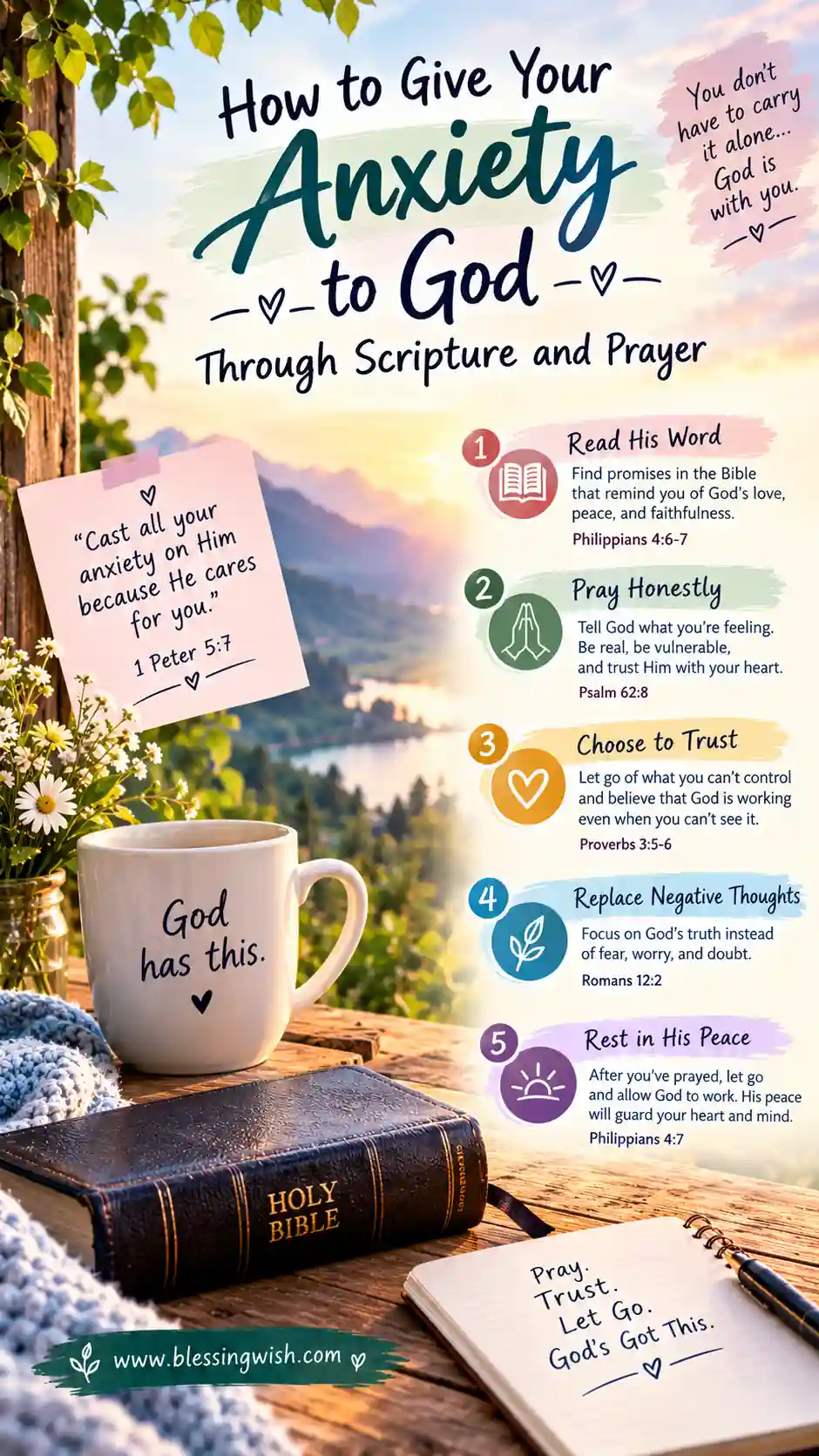
How to Give Your Anxiety to God Through Scripture and Prayer
Giving your anxiety to God does not mean pretending that your concerns are unimportant. Scripture shows a different response: bring your worries honestly before Him, ask for wisdom and help, and trust His care with what you cannot control. Prayer allows you to name your fears while Scripture gives you truths to return to when those fears come back.
First Peter 5:7 says:
“Casting all your care upon him; for he careth for you.”
The instruction is direct. Cast all your care upon God. The reason is equally direct: He cares for you. You do not have to decide that a concern is too small, too complicated, or too personal to bring before Him.
Philippians 4:6-7 provides another pattern:
“Be careful for nothing; but in every thing by prayer and supplication with thanksgiving let your requests be made known unto God.”
The passage does not tell you to ignore your concerns. It tells you to bring them to God through prayer, supplication, and thanksgiving. The result described is the peace of God guarding your heart and mind through Christ.
Psalm 55:22 gives similar encouragement:
“Cast thy burden upon the LORD, and he shall sustain thee.”
Together, these passages can shape a simple prayer practice.
Name the specific worry. Tell God exactly what is troubling you.
Ask for what you need. Pray for wisdom, strength, peace, protection, or guidance.
Surrender the outcome. Acknowledge what is outside your control.
Give thanks. Remember something specific God has already provided.
Return to Scripture. Read a verse that addresses your fear and let its message guide your thoughts.
Take the next faithful step. Do what you can responsibly while leaving the outcome with God.
A prayer based on these passages might be:
“Lord, You know what is troubling my heart. I give this worry to You because You care for me. Give me wisdom for what I need to do, strength for what I cannot change, and peace when my thoughts become overwhelmed. Help me trust Your presence and rest in Your promises. Amen.”
A Scripture or prayer journal can also help you record recurring worries, prayers, and passages that bring comfort. Writing them down can make it easier to return to the same biblical truths when anxiety returns.
Final Thoughts: Finding Peace in God’s Word
Anxiety can make your thoughts feel crowded with fear, uncertainty, and questions about what may happen next. Scripture gives you a place to bring those concerns. Again and again, the Bible points toward prayer, trust, God’s presence, His care, and the peace found through faith.
You do not need to remember every verse in this collection. Start with a few passages that speak directly to your situation.
Philippians 4:6-7 when worry is taking over your thoughts.
1 Peter 5:7 when you need to surrender a burden.
Isaiah 41:10 when fear makes you feel alone.
Psalm 56:3 when you need a short reminder to trust God.
Psalm 94:19 when your mind is crowded with anxious thoughts.
Matthew 6:25-34 when you are consumed by concerns about tomorrow.
John 14:27 when you are seeking the peace of Christ.
Read them slowly. Pray through them. Write down the passages that bring you comfort and return to them when anxiety rises again.
Faith does not require you to deny difficult emotions. It invites you to bring them to God. When anxiety becomes persistent, severe, or disruptive to daily life, seeking professional support can also be an important part of caring for yourself.
May God give you peace in troubled moments, strength when you feel weak, wisdom when the future feels uncertain, and the assurance that you are never beyond His care.
Frequently Asked Questions
What does the Bible say about anxiety?
The Bible responds to anxiety by encouraging believers to pray, trust God, cast their cares upon Him, remember His presence, and seek His peace. Philippians 4:6-7, 1 Peter 5:7, and Matthew 6:25-34 are especially direct passages about worry and anxious concerns. Scripture also acknowledges fear, distress, and troubled thoughts throughout the Psalms. Its message consistently points readers toward God’s care rather than requiring them to hide or deny difficult emotions.
What are 10 Bible verses that talk about fear?
Ten helpful Bible verses about fear include Isaiah 41:10, Psalm 56:3, Psalm 34:4, Joshua 1:9, Psalm 23:4, Deuteronomy 31:8, 2 Timothy 1:7, Isaiah 43:1-2, Psalm 27:1, and Hebrews 13:6. These passages emphasize God’s presence, strength, protection, and help.
Which Bible verse says “I will not fear”?
Psalm 56:3 says, “What time I am afraid, I will trust in thee.” Hebrews 13:6 also expresses this confidence: “The Lord is my helper, and I will not fear.” Both passages connect freedom from fear with trusting God’s help.
What did Jesus say about anxiety?
Jesus addressed anxiety and worry directly in Matthew 6:25-34, teaching His followers not to be consumed by concerns about life or tomorrow. He pointed them toward God’s care and provision and encouraged them to focus on the needs of each day.
How can I ask God to take away anxiety?
You can ask God to take away anxiety through an honest prayer that names your fears and asks for His peace, wisdom, strength, and help. Philippians 4:6-7 encourages believers to bring their requests to God through prayer and thanksgiving.
What Bible verse helps with anxiety and worry?
Philippians 4:6-7 is one of the clearest passages for anxiety and worry because it encourages prayer instead of anxious concern and points to the peace of God guarding the heart and mind through Christ.
What Psalm is good for anxiety?
Psalm 56:3, Psalm 55:22, Psalm 94:19, and Psalm 46 are particularly helpful for anxiety. They address fear, burdens, troubled thoughts, God’s comfort, and finding refuge in Him during difficult circumstances.
What does the Bible say about giving your worries to God?
The Bible encourages believers to give their worries to God rather than carrying every burden alone. First Peter 5:7 says to cast your care upon Him because He cares for you, while Psalm 55:22 encourages you to cast your burden upon the Lord.
What Bible verse helps calm an anxious mind?
Psalm 94:19 speaks directly to an anxious mind: “In the multitude of my thoughts within me thy comforts delight my soul.” Philippians 4:6-7 also points anxious thoughts toward prayer, thanksgiving, and the peace of God.
How does the Bible say to overcome anxiety?
The Bible points believers toward prayer, trust, surrender, God’s promises, and His presence when facing anxiety. Philippians 4:6-7, 1 Peter 5:7, Matthew 6:25-34, and Isaiah 41:10 provide practical biblical encouragement for responding to worry and fear.
Stay Blessed Every Week 💛
Get the latest blessings, prayers, uplifting quotes, and heartfelt wishes delivered straight to your inbox.