250+ Comforting Sorry for Your Loss Messages to Soften Heavy Grief
Affiliate Disclosure: Some links in this post are affiliate links. If you buy through them, I may earn a small commission at no extra cost to you.
When someone dies, finding the right words can feel difficult. Sorry for your loss messages offer a simple way to acknowledge someone’s grief, express sincere sympathy, and remind them that they are not facing the difficult days alone. A thoughtful condolence message does not need to be long or elaborate. It needs to be sincere, gentle, and appropriate for the relationship you share with the grieving person.
This collection includes heartfelt condolences, short sympathy messages, messages for the loss of a mother, father, spouse, sibling, friend, and other loved ones. You will also find wording for cards, texts, letters, professional situations, and Christian expressions of comfort.
Written and reviewed by the BlessingWish editorial team. Messages and Prayers are compiled with care to reflect Christian tradition and Scripture, and updated periodically for accuracy.
A heartfelt condolence message can acknowledge someone’s pain without trying to explain or fix their grief. When you are unsure what to say, keep your words sincere and focus on the person who is mourning. You can mention your sympathy, offer your presence, or gently honor the memory of the person who died.
These messages work well for a close friend, relative, neighbor, colleague, or anyone experiencing the loss of someone dear.
I am deeply sorry for your loss. May you find comfort in the love of your family, the support of your friends, and the precious memories you shared with your loved one.
Please accept my heartfelt condolences during this painful time. I hope the memories you hold close bring moments of peace as you move through the days ahead.
My deepest sympathy is with you and your family. May you receive the strength, comfort, and support you need as you grieve this tremendous loss.
I was saddened to hear about your loss. Please know that you are in my thoughts, and I am here if you need someone to listen, talk, or simply sit with you.
Sending my sincere condolences to you and your family. May the love surrounding you provide comfort, and may the memories of your loved one remain close to your heart.
My heart goes out to you during this difficult time. Losing someone we love can leave an emptiness that words cannot fully describe, but you do not have to face your grief alone.
Please know how sorry I am for your loss. I hope you are surrounded by people who care for you and give you space to grieve in your own way.
With deepest sympathy, I am thinking of you and your family. May each cherished memory bring a little comfort when the days feel especially difficult.
I am so sorry to hear about the passing of your loved one. May you find peace in the memories you created together and strength in the people who stand beside you now.
Please accept my sincere condolences. There are no perfect words for a loss like this, but I hope you know that your grief matters and that you have caring people around you.
My deepest sympathies are with you. May you find comfort in remembering the life, kindness, and moments that made your loved one so special to you and your family.
I am thinking of you with sympathy and care. I hope the days ahead bring gentle moments of peace and that the memories you treasure continue to give you comfort.
We are deeply sorry for your loss. May your family find strength in one another and may the love shared with your loved one remain a source of comfort.
My sincerest condolences to you and your family. I hope you have the support you need during this period of mourning and plenty of space to remember and grieve.
I am very sorry for your loss. May you be comforted by the people who love you, the memories you cherish, and the knowledge that your loved one’s life mattered deeply.
Please know that my thoughts are with you during this difficult time. I am sending sympathy and care to you and your family as you navigate this painful loss.
My heartfelt condolences are with you. May the memories of your loved one bring warmth to your heart even as you work through the sadness of their passing.
I am saddened by your loss and want you to know that I care. If there is anything I can do to support you, please do not hesitate to reach out.
Sending you my deepest sympathy. May you have strength for today, comfort for tomorrow, and caring people beside you throughout your journey through grief.
Please accept my deepest condolences. I hope you find moments of peace amid the sadness and continue to hold close the memories that mean the most to you.
Sometimes a few sincere words are enough. A short condolence message can be appropriate when you are sending a quick text, signing a sympathy card, writing in a condolence book, or speaking to someone briefly after hearing about their loss. Keep the wording simple and avoid trying to make the grief sound smaller than it is.
I am so sorry for your loss. My thoughts are with you and your family.
Please accept my deepest condolences during this difficult time.
I am thinking of you and sending you my sincere sympathy.
My heart goes out to you and your family.
I am deeply sorry to hear about your loss.
Sending you comfort, strength, and my heartfelt condolences.
You and your family are in my thoughts and prayers.
May you find peace and comfort in the days ahead.
I am so sorry. Please know that I am here for you.
My deepest sympathy goes out to you and your loved ones.
Sending my sincere condolences to you and your family.
I am thinking of you during this painful time.
May the memories of your loved one bring you comfort.
Please know that you are in my thoughts as you grieve.
I am deeply saddened by your loss. Sending you my sympathy.
With heartfelt sympathy, I am thinking of you and your family.
May you have strength and support during this difficult time.
I am sorry to hear of your loss. Please take care of yourself.
Sending love, prayers, and sincere condolences to your family.
My thoughts are with you as you remember and mourn your loved one.
Sorry for Your Loss Messages for the Loss of a Mother
The death of a mother can bring profound grief to a family. When you write a sympathy message for someone who has lost their mother, choose words that recognize the significance of the relationship without assuming exactly how the person feels. A simple expression of care, support, and remembrance can mean more than an elaborate message.
I am deeply sorry for the loss of your mother. May the beautiful memories you shared bring you comfort and strength during this difficult time.
Please accept my heartfelt condolences on your mother’s passing. I hope you feel surrounded by love and support as you grieve someone so important to your life.
My deepest sympathy is with you after the loss of your mother. May her memory remain close to your heart and bring comfort during the days ahead.
I am so sorry to hear that your mother has passed away. Thinking of you and your family and wishing you peace, strength, and comfort.
Losing a mother is a profound loss. Please know that I am thinking of you and that I am here to support you in whatever way I can.
My sincere condolences to you and your family on the passing of your mother. May the memories of her love and presence remain a source of comfort.
I am deeply saddened by your mother’s death. May you find strength in your family, comfort in your memories, and peace as you move through this difficult season.
Please accept my deepest condolences for the loss of your mother. I hope the love she gave you throughout her life continues to live in the memories you hold dear.
My heart goes out to you following the loss of your mom. May you have caring people around you and the space you need to grieve and remember her.
I am very sorry for your loss. Your mother’s life and the love she shared with your family will always remain part of the memories you treasure.
Sending my heartfelt sympathy after the passing of your mother. May God give you comfort and strength, and may her memory bring peace to your heart.
My deepest condolences to you and your family. I hope you can find comfort in remembering the special moments, lessons, and love your mother gave throughout her life.
I was saddened to hear about your mother’s passing. Please know that you are in my thoughts, and I am keeping you and your family close in prayer.
May you find comfort as you remember your mother and the many moments you shared together. I am truly sorry for your loss and am thinking of you.
Please accept my sincere condolences on the loss of your mother. May you be surrounded by compassion, patience, and people who will stand beside you through your grief.
Sorry for Your Loss Messages for the Loss of a Father
Losing a father can affect every part of family life. When someone is grieving their dad, a thoughtful message should recognize the depth of the relationship while leaving room for their personal emotions. These words can help you express sympathy without trying to explain their pain or rush their grieving process.
I am deeply sorry for the loss of your father. May the memories of his guidance, kindness, and love remain close to your heart and give you strength during this difficult season.
Please accept my sincere condolences on the passing of your dad. I hope the lessons he taught you and the moments you shared continue to bring comfort as you remember his life.
My heart goes out to you and your family after the loss of your father. May you find peace in knowing how deeply he was loved and how much his presence meant to those around him.
I was saddened to hear about your father’s passing. May the memories of his voice, stories, advice, and loving presence bring you moments of comfort in the days ahead.
Losing a father leaves a deeply personal emptiness. Please know that I am thinking of you and your family and wishing you strength as you navigate this painful time.
My deepest sympathy is with you following the loss of your dad. May the love he gave your family continue to be reflected in the memories and traditions you carry forward.
I am truly sorry for your loss. May you find comfort in remembering the special moments you shared with your father and in the people who are standing beside you now.
Sending heartfelt condolences to you and your family. I hope your father’s memory brings warmth to your heart and that you have the support you need while grieving his passing.
Please know that you are in my thoughts after the loss of your father. May you have patience with yourself, strength for each day, and caring people nearby when you need them.
I am so sorry your family is facing this loss. Your father’s life, love, and influence will remain part of the stories and memories that your family continues to cherish.
My sincere condolences on the passing of your father. May God comfort you, strengthen your family, and surround you with people who understand the weight of this difficult moment.
Thinking of you with sympathy as you mourn your dad. May every cherished memory, family story, and meaningful moment help you honor the life he lived and the love he shared.
I am deeply saddened by your father’s death. Please remember that you do not have to carry everything alone. I am here to listen and support you whenever you need me.
May you find comfort in the years, memories, and experiences you shared with your father. I am truly sorry for your loss and am keeping you and your family in my thoughts.
Please accept my deepest condolences. May your father’s memory remain a source of love and inspiration, and may your family find strength in one another during this time of mourning.
Sorry for Your Loss Messages for a Husband or Wife
The death of a spouse can bring a profound sense of loss because it changes everyday life as well as cherished memories of the past. A condolence message should be gentle and personal. Avoid telling someone how they should feel, and instead offer compassion, patience, and your continued presence.
I am deeply sorry for the loss of your husband. May the love you shared, the memories you created, and the life you built together bring comfort during this heartbreaking time.
Please accept my heartfelt condolences on the passing of your wife. I hope you are surrounded by people who care for you and give you the patience and support you need.
My heart goes out to you after the loss of your beloved husband. May each treasured memory remind you of the love and companionship you shared throughout your life together.
I am so sorry to hear about your wife’s passing. May the years you spent together remain filled with precious memories that bring comfort when the days feel especially difficult.
Losing a life partner is an immense loss. Please know that I am thinking of you and that I am here to offer support, a listening ear, or practical help whenever you need it.
My deepest sympathy is with you following the death of your husband. May you find moments of peace while remembering his laughter, kindness, and the meaningful life you shared.
Sending sincere condolences after the loss of your wife. May the love between you remain a cherished part of your memories and may those memories provide comfort in your grief.
I was saddened to learn of your husband’s passing. Please take each day at your own pace, surround yourself with people you trust, and allow yourself the space to mourn.
My heartfelt sympathy goes out to you after losing your wife. May the memories of ordinary days, special celebrations, quiet conversations, and shared dreams remain precious to you.
I am truly sorry for this painful loss. Your husband touched your life in ways that cannot be measured, and I hope the love you shared continues to bring you comfort.
Please accept my deepest condolences for the loss of your wife. May your family stand together with compassion and may you find strength in the memories that mean the most.
Thinking of you during this difficult time. I hope you are given the time, care, and understanding needed to grieve the loss of your husband without feeling pressured to be strong.
I am saddened by the passing of your wife. May her memory live on through the people she loved, the moments she shared, and the lasting impression she left on your family.
My sincere condolences are with you. I hope you find gentle moments of peace as you remember your husband and the many chapters of life you experienced together.
There are no simple words for the loss of a spouse. Please know that you are cared for, remembered, and supported as you face the days ahead without your beloved wife.
Sorry for Your Loss Messages for a Son, Daughter, Brother, or Sister
The death of a child or sibling can create a deeply personal grief that words cannot easily address. When offering sympathy, avoid comparisons or statements about how long grief should last. A simple message that recognizes the loss and offers steady support can be meaningful.
I am deeply sorry for the loss of your son. May the memories of his life, his personality, and the love you shared remain precious to you and your family forever.
Please accept my heartfelt condolences on the passing of your daughter. I hope you are surrounded by people who will offer patience, kindness, and support throughout your grief.
My heart goes out to you after the loss of your beloved son. There are no easy words for such sorrow, but please know that you are in my thoughts.
I am so sorry about your daughter’s passing. May the memories of her smile, laughter, and special moments bring comfort as you remember the beautiful parts of her life.
Sending my deepest sympathy after the loss of your brother. May your shared memories, family stories, and years together remain a lasting reminder of the bond you had.
I am truly sorry for the loss of your sister. May you find comfort in remembering the moments that made your relationship special and in the people who care for you now.
Please know how saddened I am by the loss of your son. I hope you have loving support around you and the freedom to grieve in whatever way feels natural to you.
My sincere condolences on the passing of your daughter. May her memory remain present in your family and may the love you shared continue to hold a special place in your heart.
Thinking of you and your family after the loss of your brother. May the memories you created together bring moments of warmth even during this painful period.
I am deeply saddened by your sister’s passing. Please know that I care about what you are going through and am here if you need someone to listen or simply be present.
My heartfelt sympathy is with you following the loss of your child. May you receive compassion and support from those around you as you carry this profound grief.
I am sorry for the loss of your daughter. May every treasured memory become part of the legacy she leaves with your family and everyone whose life she touched.
Please accept my deepest condolences on your brother’s passing. I hope your family finds strength together and comfort in the years of memories you shared.
My thoughts are with you after losing your sister. May you have caring people beside you and plenty of time to remember the moments that made her such an important part of your life.
I am truly sorry for your loss. May the love surrounding your family give you strength, while the memories of your son, daughter, brother, or sister remain close to your heart.
Sorry for Your Loss Messages for a Grandparent, Grandchild, Aunt, Uncle, or Cousin
Extended family members can hold an important place in our lives, whether through childhood memories, family traditions, celebrations, or years of shared experiences. These messages can help you acknowledge the loss while honoring the special connection the grieving person had with their relative.
I am so sorry for the loss of your grandparent. May the memories of their wisdom, stories, kindness, and family traditions bring comfort as you remember their life.
Please accept my sincere condolences on the passing of your grandmother. I hope the special memories you shared continue to bring warmth to your heart during this difficult time.
My deepest sympathy is with you after losing your grandfather. May the lessons he shared and the moments you enjoyed together remain meaningful parts of your life.
I am deeply sorry for the loss of your grandchild. May your family surround you with love and understanding as you grieve someone who brought such meaning to your life.
Thinking of you after the passing of your aunt. May the memories of her kindness, laughter, and place within your family bring you comfort in the days ahead.
My heartfelt condolences are with you following the loss of your uncle. I hope the years of memories you shared help you honor his life and the role he played in your family.
I am truly sorry about your cousin’s passing. May your family find strength in one another and continue to treasure the memories that made your relationship special.
Please accept my deepest sympathy for your loss. May the love of your family, the comfort of treasured memories, and the support of friends help you through this difficult season.
I was saddened to hear about your grandparent’s passing. May their memory remain a cherished part of your family history and bring peace whenever you think of them.
My sincere condolences to you and your family. I hope you find comfort in remembering the gatherings, conversations, celebrations, and simple moments that made your loved one special.
Sending you compassion and sympathy after this family loss. May you have the strength to face each day and the support of people who understand that grief takes time.
I am so sorry for what you are going through. May the memories of your aunt, uncle, cousin, grandparent, or grandchild remain a lasting source of love for your family.
Sorry for Your Loss Messages for a Friend or Someone Who Lost a Loved One
When a friend is grieving, your presence can matter as much as the words you choose. A sincere message does not need to remove their sadness. Instead, it can acknowledge what happened, show that you care, and remind them that support is available. Choose wording that feels natural for your relationship and avoid making assumptions about how they should cope.
I am so sorry for your loss, my friend. Please know that I am thinking of you and am here to listen, sit with you, or help with anything you may need.
My heart goes out to you during this painful time. I hope you feel surrounded by people who care about you and are willing to stand beside you through every difficult day.
I was deeply saddened to hear about your loss. Please take all the time you need to grieve, remember, and process everything. You do not have to pretend that you are okay.
Sending you my sincere sympathy and a caring heart. I know there may be little I can say to change what happened, but I want you to know that you are not alone.
I am thinking of you and your family after this heartbreaking loss. May the memories of your loved one bring comfort, and may you find strength in those who care about you.
Please accept my deepest condolences. I hope you have people around you who can offer practical help, a listening ear, or quiet company whenever the days become especially difficult.
I am truly sorry that you are going through this. Your loved one was important to you, and I hope you feel free to remember them, speak about them, and grieve in your own way.
My sincere thoughts are with you after this difficult loss. If you need someone to talk with, share memories with, or simply spend time beside you, I am here.
I wish I had the perfect words to make this easier. Since I do not, I simply want to remind you that I care about you and will continue to be here.
Sending love and sympathy to you and everyone grieving alongside you. May the support of close friends and family give you moments of peace while you adjust to this painful change.
I am so sorry you have had to say goodbye to someone you love. May the memories you carry become a source of comfort and a way to keep their presence close.
Please know that I am holding you in my thoughts. You do not need to respond to this message. I simply wanted you to know that I care and am thinking of you.
How to Say Sorry for Your Loss and Express Condolences
Knowing how to express condolences can feel uncomfortable, especially when the loss is recent. The safest approach is usually simple, sincere, and focused on the grieving person. You do not need to explain death or offer a solution. A few compassionate words can communicate genuine care without putting pressure on someone to respond.
When choosing what to say, consider these practical guidelines:
Acknowledge the loss directly. Saying that you are sorry about the person’s loss is often clearer and more comforting than avoiding the subject with vague language.
Keep your message sincere. Use words you would naturally say. A short, genuine expression of sympathy can feel more meaningful than a long message filled with formal phrases.
Mention the person who died when appropriate. Using their name or referring to a meaningful quality can show that you recognize their individual life and importance.
Offer specific support. Instead of saying only, “Let me know if you need anything,” consider offering something practical, such as preparing a meal, making a phone call, or helping with an errand.
Respect their way of grieving. People respond to bereavement differently. Avoid telling someone to stay strong, move on, or look for a positive side to the situation.
Do not compare their loss with yours. Even when you have experienced grief yourself, their relationship and circumstances are unique. Give them room to experience their own emotions.
Follow up later. Support can be especially meaningful after the funeral or initial messages have stopped. A thoughtful check-in weeks later can remind someone that they are still remembered.
A simple structure can help when you are unsure where to begin: acknowledge the loss, express sympathy, offer support, and close with a gentle wish for comfort. This approach works for a card, text, email, or personal conversation.
What to Write in a Sympathy or Condolence Card
A sympathy card gives you a little more space than a quick text, but it still does not need to be lengthy. The most meaningful card usually combines a sincere expression of sorrow with a personal sentence about the grieving person or the loved one who died. If you knew the deceased, sharing one brief, respectful memory can make the note especially personal.
You can build your card around these elements:
Start with sympathy. Open by acknowledging the loss and expressing your sincere condolences. This immediately makes the purpose of the card clear.
Add a personal thought. If you knew the deceased, mention a quality, memory, or moment that you genuinely remember. Keep it respectful and relevant to the relationship.
Recognize the grieving person. Let them know you are thinking about them rather than focusing only on the circumstances of the death.
Offer meaningful support. If you are close to the family, mention a specific way you can help. A concrete offer is often easier to accept than a general promise.
Close gently. End with a simple wish for comfort, peace, strength, or support in the days ahead.
For example, a card might say that you are deeply sorry for the loss, share a warm memory of the person who died, and remind the family that they remain in your thoughts. If the recipient is religious, you can also include a brief prayer or faith-based expression that fits their beliefs.
Sorry for Your Loss Text Messages
Text messages are useful when you want to reach someone quickly after hearing about a death. Because grief can make communication difficult, keep the message considerate and avoid expecting an immediate reply. A short text can simply let the person know they are remembered and supported.
I am so sorry for your loss. I am thinking of you and your family and sending sincere sympathy during this difficult time.
I just heard about your loss and wanted you to know that I am thinking about you. Please do not feel any need to respond.
My deepest condolences to you and your family. I hope you are surrounded by caring people who can support you through the days ahead.
I am truly sorry. If you need someone to talk to, sit with you, or help with something practical, I am only a message away.
Sending you love and heartfelt sympathy. I hope the memories of your loved one bring you moments of comfort when you need them most.
I am thinking of you today and holding your family in my thoughts. Please take care of yourself and give yourself the time you need to grieve.
I was saddened to hear about your loss. There may not be much I can say, but I want you to know that I care and I am here for you.
Please accept my sincere condolences. I hope you have support around you and find small moments of peace as you move through this difficult period.
I am so sorry you are facing this loss. You do not have to answer this message. I simply wanted to remind you that you are cared for.
My heart goes out to you and your family. May the memories you shared with your loved one remain close and bring comfort over time.
Condolence Letters and Sympathy Notes
A condolence letter gives you more room to express personal sympathy than a short text or card. It can be especially meaningful when you knew the person who died or have a close relationship with the grieving family. Keep the tone warm and sincere, and focus on offering comfort rather than trying to explain the loss.
Dear [Name], I was deeply saddened to hear about your loss. Please accept my heartfelt condolences. I hope the memories of your loved one and the love shared within your family bring you comfort during this difficult time.
Dear [Name], my thoughts are with you and your family following this painful loss. [Loved one’s name] will be remembered for the kindness and warmth they brought to those around them. May those memories remain close to you.
Please accept my sincere sympathy as you mourn the loss of someone so dear to you. I know this is an incredibly difficult time, and I hope you have caring people around you who can provide comfort and support.
I was very sorry to learn about your loss. Your loved one made a meaningful impression on many people, and I feel grateful to have known them. May their memory continue to bring warmth to your family.
Thinking of you with heartfelt sympathy during this period of mourning. I hope you are able to find comfort in the memories you created together and in the people who are willing to walk beside you through this difficult season.
Please know that I am keeping you and your family in my thoughts. Words cannot remove the pain of losing someone you love, but I hope this note reminds you that you are cared for and remembered.
I am deeply sorry for what your family is experiencing. May you find strength in one another and comfort in the memories that will remain part of your family’s story for years to come.
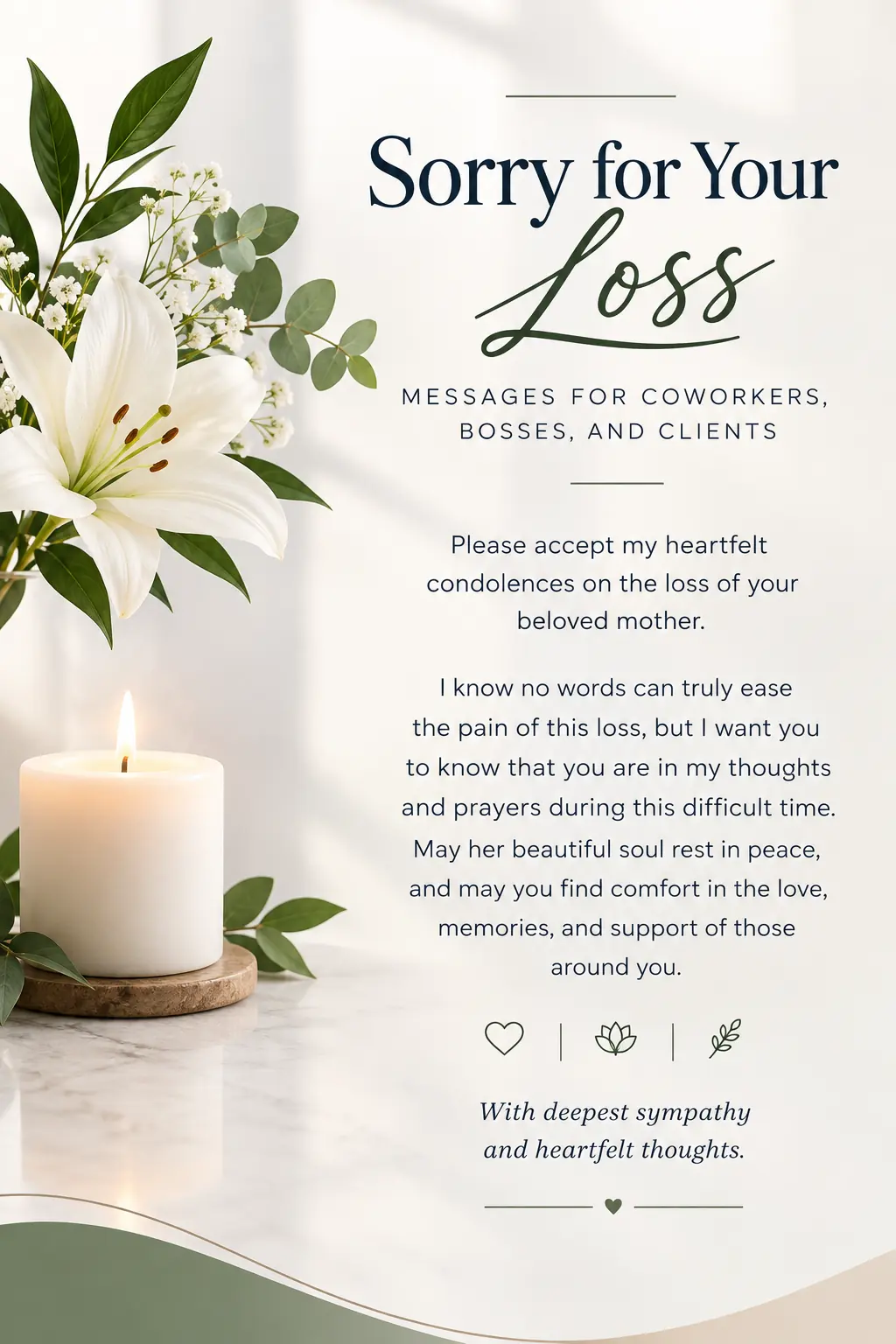
Professional Sorry for Your Loss Messages for Coworkers, Bosses, and Clients
When a coworker, manager, business partner, or client experiences a bereavement, your message should be respectful and professional while still sounding human. Keep personal details limited unless you know the person well. A brief expression of sympathy and a considerate offer of support is usually appropriate.
I was very sorry to hear about your loss. Please accept my sincere condolences. Wishing you and your family comfort and strength during this difficult time.
My deepest sympathies are with you and your family. Please take the time you need, and know that we are thinking of you during this period of mourning.
I am sorry to learn of your loss. Please accept my heartfelt condolences, and do not hesitate to let us know if there is anything we can do to support you professionally while you take care of your family.
Sending my sincere condolences to you and your loved ones. I hope you are given the time and space needed to grieve, and I wish you peace in the days ahead.
Please accept my deepest sympathy following your loss. Your wellbeing and family understandably come first, so please know that we are thinking of you and respecting the time you need away from work.
I was saddened to hear about the passing of your loved one. My thoughts are with you and your family, and I hope you find comfort through the support of those closest to you.
On behalf of the team, please accept our sincere condolences. We are thinking of you during this difficult time and will do our best to provide flexibility and support while you focus on your family.
I am truly sorry for your loss. Please know that there is no pressure to respond. We simply wanted to express our sympathy and let you know that your colleagues are thinking of you.
Please accept our heartfelt condolences on your family’s loss. We hope you have the support you need during this difficult period and that returning to work can happen at a pace that feels manageable.
My sincere condolences to you and your family. We appreciate that this is a difficult personal time and want you to know that our thoughts are with you.
An email condolence message should be concise, respectful, and easy to read. A simple subject line such as “My Sincere Condolences” or “Thinking of You” is appropriate. The body can acknowledge the loss, express sympathy, and offer support without becoming overly formal or lengthy.
I was very sorry to hear about your loss. Please accept my sincere condolences. My thoughts are with you and your family, and I hope you find comfort and support during this difficult time.
Please accept my heartfelt sympathy following the passing of your loved one. I know words cannot make this easier, but I wanted to reach out and let you know that you are in my thoughts.
I am deeply sorry for your loss. Please take the time you need with your family, and know that I am thinking of you and wishing you strength and peace in the days ahead.
Sending my sincere condolences to you and your family. If there is any reasonable way I can support you, please feel free to reach out whenever you are ready.
Christian Sorry for Your Loss Messages, Prayers, and Scripture
For someone who welcomes Christian faith, a message can include prayer, God’s comfort, or a carefully chosen Bible verse. Keep the wording gentle and avoid using Scripture to minimize grief. Faith-based condolences can acknowledge both the reality of sorrow and the hope found in Christian belief.
I am deeply sorry for your loss. May the Lord surround you with His comfort, strengthen your heart, and give you peace as you walk through these difficult days.
May God hold you and your family close during this time of grief. I am praying that His presence gives you strength when you feel weary and comfort when the sadness feels especially heavy.
My heartfelt condolences are with you. May the Lord bring peace to your heart, give you courage for each new day, and surround you with people who will support you in love.
I am keeping you and your family in prayer. May God give you grace for today, comfort for tomorrow, and the assurance of His presence throughout your season of mourning.
May the Lord comfort you as you remember the life of your loved one. I pray that cherished memories, loving family, and God’s enduring presence bring moments of peace amid your grief.
My deepest sympathy is with you. May God strengthen you when you feel overwhelmed and remind you that you are surrounded by His love and the prayers of those who care for you.
I pray that the Lord will give your family comfort and peace during this painful time. May your faith provide a place of hope while you grieve the loss of someone so precious.
May God’s presence be near to you in every difficult moment. I am praying for strength, comfort, and peace for you and your family as you mourn your loved one’s passing.
The Bible reminds believers of God’s nearness to those who are hurting. May that promise encourage your heart as you grieve, and may the Lord surround your family with compassion and support.
I am praying for you today and in the days ahead. May God carry you through moments of sorrow, give you strength when you need it, and help you find comfort in His promises.
May the Lord bless you with peace that steadies your heart and strength that carries you through each day. Please know that you and your family remain in my prayers.
I am so sorry for your loss. May your faith, your family, and the love you shared with your loved one help you through this difficult season, while God’s grace gives you hope for the days ahead.
Non-Religious Sorry for Your Loss Messages
Not everyone finds religious language comforting after a death. If you are unsure about someone’s beliefs, a secular condolence message is a thoughtful choice. Focus on compassion, remembrance, and support without mentioning God, prayer, heaven, or religious beliefs.
I am deeply sorry for your loss. I hope you find comfort in the memories you shared and in the people who care about you.
Please accept my sincere condolences. Thinking of you and your family and wishing you strength and peace during this difficult time.
My heart goes out to you after this painful loss. I hope you have loving people around you who can support you through the days ahead.
I am so sorry you are going through this. May the memories of your loved one remain close and bring moments of comfort when you need them.
Sending you my heartfelt sympathy. I hope you have the time, space, and support you need to grieve in your own way.
Please know that I am thinking of you and your family. I am here to listen, help, or simply be present whenever you need someone.
I was saddened to hear about your loss. Your loved one’s memory will remain meaningful to everyone who had the privilege of knowing them.
What to Say When Someone Dies or Passes Away
When someone dies, a simple and sincere expression of sympathy is usually more appropriate than trying to find perfect words. You can acknowledge the loss directly, mention the person who died if you knew them, and offer support without expecting the grieving person to respond.
Here are some approaches that can help:
Acknowledge what happened: Say that you are sorry to hear about their loss. Direct language can show that you are comfortable recognizing their grief rather than avoiding the subject.
Express genuine sympathy: Tell them that you are thinking about them or their family. You do not need an elaborate explanation to communicate care.
Remember the person: If you knew the deceased, sharing one brief positive memory can make your words more personal and meaningful.
Offer practical help: Consider saying, “I can bring dinner,” “I can help with errands,” or “I am available if you need anything.” Specific offers are often easier to accept.
Give them space: Someone who is grieving may not have the energy to talk or respond. Let your message stand without asking them to reassure you.
Avoid phrases that minimize grief, such as telling someone to “move on” or suggesting that everything happens for a reason. It is usually better to acknowledge the pain and offer steady support.
Receiving many sympathy messages while grieving can feel overwhelming. There is no requirement to answer every person immediately. A brief response is enough, and close friends or family members may appreciate a more personal acknowledgment when you have the emotional energy.
Thank you for your kind words and for thinking of me and my family during this difficult time.
I truly appreciate your condolences and the support you have shown us. Your message means more than you know.
Thank you for reaching out and remembering my loved one. Your thoughtfulness has brought comfort during these difficult days.
I appreciate your sympathy and your willingness to be there for me. It means a great deal to know that I have caring people around me.
Thank you for keeping my family in your thoughts. We are taking things one day at a time and are grateful for your kindness.
Your message was very comforting to receive. Thank you for taking the time to reach out and share your sympathy with us.
Thank you for your thoughtful words. I may not be able to respond fully right now, but please know that I sincerely appreciate your support.
Final Words
Finding the right words after a death is never easy. A sincere message does not need to explain grief or make the pain disappear. Sometimes, simply acknowledging the loss and reminding someone that they are cared for can bring meaningful comfort.
Whether you are writing to a close friend, family member, coworker, or someone you know casually, choose words that feel genuine and respectful. You can keep your message short, share a treasured memory, offer practical support, or include a prayer when faith is important to the recipient.
Grief has no single timeline, and people may need different kinds of support as they move through it. A thoughtful message can be a small but meaningful reminder that they do not have to face difficult days without compassion around them.
Use these Sorry for Your Loss Messages as a starting point, then personalize them whenever possible. Mentioning the person’s name, a special memory, or a specific offer of help can make your condolences feel more personal and heartfelt.
Frequently Asked Questions
What is the best condolence message?
The best condolence message is sincere, simple, and focused on the grieving person. You can say, “I am deeply sorry for your loss. May you find comfort in the memories you shared and in the love of those around you.”
How do you say “sorry for your loss” nicely?
You can make the phrase warmer by adding a personal expression of care or support. For example, say, “I am deeply sorry for your loss. My thoughts are with you and your family, and I am here if you need anything.”
How to comfort someone over text who lost a loved one?
Send a brief, compassionate message that acknowledges their loss without expecting a response. Let them know you are thinking of them and, when appropriate, offer specific help such as a phone call, meal, or visit.
What to say to someone who lost a son suddenly?
Acknowledge the devastating loss without trying to explain why it happened or offering easy answers. You might say, “I am deeply sorry for the sudden loss of your son. My heart is with you and your family, and I am here to support you in any way I can.”
What is a good short condolence message?
A simple message such as, “I am so sorry for your loss. My thoughts are with you and your family during this difficult time,” is appropriate for a text, card, or brief personal note.
What should I write in a sympathy card?
Start by acknowledging the loss, then express sincere sympathy and offer support. If you knew the deceased, adding a short, genuine memory can make the card more personal and meaningful.
What can I say instead of “sorry for your loss”?
You can say, “I am thinking of you,” “Please accept my sincere condolences,” “My heart goes out to you,” or “I am here for you.” Choose wording that sounds natural for your relationship.
Is it okay to send condolences by text?
Yes, sending condolences by text can be appropriate, particularly when you want to reach someone quickly. Keep the message thoughtful and avoid asking the grieving person to respond or comfort you.
What should you avoid saying to someone who is grieving?
Avoid minimizing their pain, comparing their experience with yours, giving unwanted advice, or suggesting that they should recover quickly. Compassionate acknowledgment and patient support are usually more helpful.
Stay Blessed Every Week 💛
Get the latest blessings, prayers, uplifting quotes, and heartfelt wishes delivered straight to your inbox.